Minecraft as a Mirror of Cybersecurity: From Digital Playground to Attack Vector
Minecraft offers a hands-on introduction to computing—and a lesson in how software flaws, malicious mods and home servers can create real security risks.
Minecraft is the best-selling video game ever made, a milestone documented in Mojang’s anniversary timeline. What began as a game about stacking three-dimensional blocks has grown into a sprawling computing ecosystem of servers, networks and third-party software. For many children and teenagers, it is where they first encounter those concepts at all: they join a server before they know what a server is, and install software add-ons long before anyone explains what running someone else’s code actually means.
That makes the game worth studying as a scale model of the IT industry. The same structures that turn it into an effective training ground for cybersecurity also make it a functioning attack surface. Security incidents involving the game can reach beyond virtual worlds: malicious code running on a household computer can put saved passwords, personal accounts and other data on that device at risk.

A curriculum built from blocks
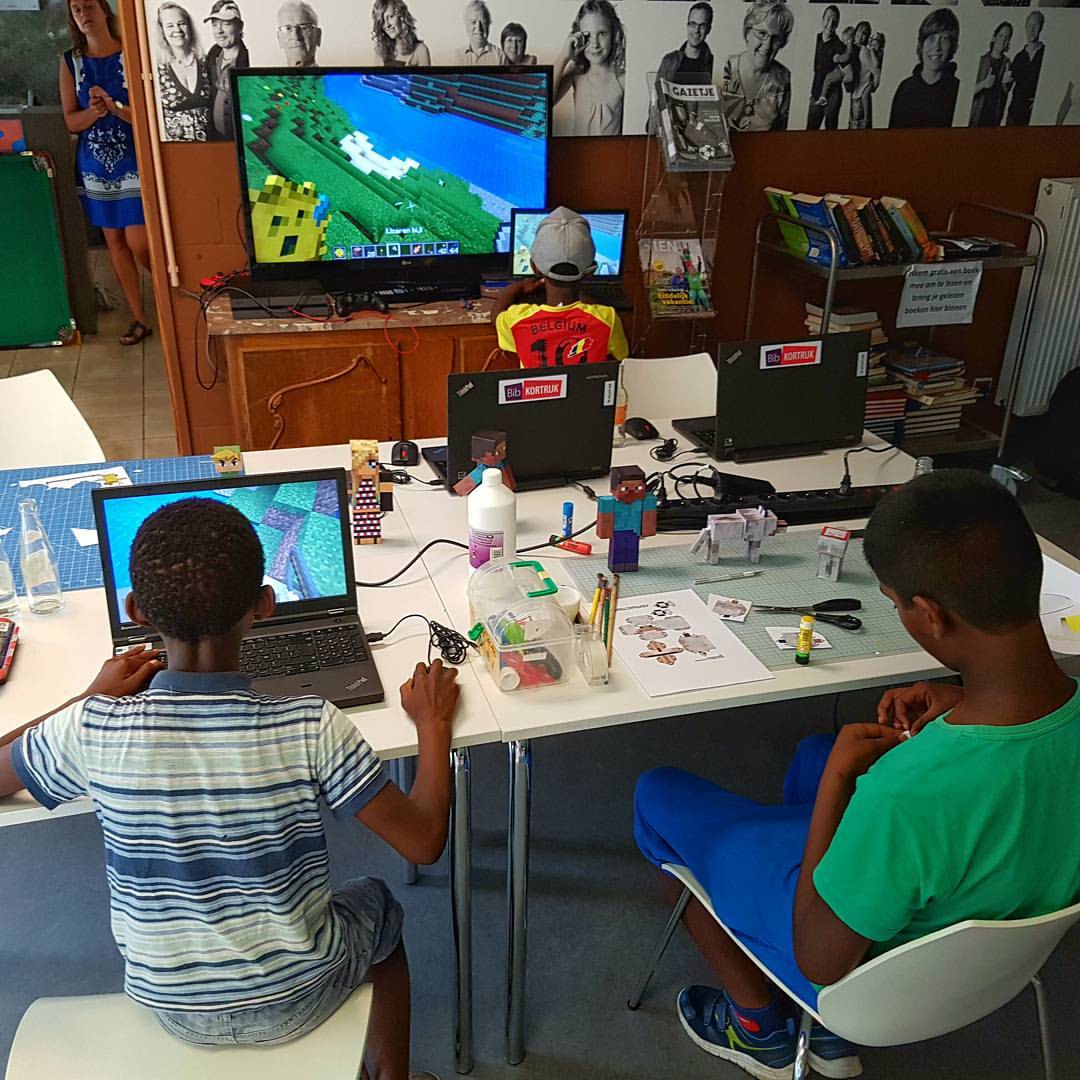
For parents and educators, the clearest value lies in Minecraft Education, the game’s official learning platform. Its cybersecurity learning pathway introduces security fundamentals through gameplay, with lessons aligned to standards from organisations such as CYBER.ORG. The main collections are staged by age:
- CyberSafe (ages 7–11) introduces online safety, including privacy, personal information and recognising deceptive situations.
- Cyber Fundamentals (ages 10–14) develops an understanding of cybersecurity concepts and how to protect digital systems.
- Cyber Expert (ages 13–18) explores topics including encryption, message integrity, social engineering and malware.
Another experience, Cyber Defender, uses a tower-defense-style game to represent malware, ransomware and DDoS attacks. Players build defenses while allowing friendly visitors to enter.
The teaching logic is simple. A firewall is an abstraction; a child may have no mental model for filtering network traffic. But a child who builds a redstone-controlled entrance—the game’s equivalent of an electrical circuit—and decides who may enter is already thinking about access control. The analogy has limits: a redstone door is not an identity-verification system. It makes the question of permission concrete before the technical vocabulary is introduced.
That question also connects to Zero Trust, but it does not define the whole architecture. In NIST’s description, users and devices do not receive automatic trust merely because they are inside a network. Authentication and authorisation are required before access to a resource is established. Minecraft can illustrate a starting principle; it cannot reproduce the complete security model with a gate.
Log4Shell: when a chat message became an exploit
The game looks harmless. Underneath it runs real software, and real software attracts real attackers. Minecraft has different editions; the Java-based version at the centre of this incident was Minecraft: Java Edition, not Bedrock Edition.
In December 2021, a critical vulnerability named Log4Shell (CVE-2021-44228) was disclosed in Log4j, a Java library for recording events. Minecraft: Java Edition used Log4j to log activity, including chat messages.
An analogy helps. A logging system is supposed to act like a clerk who writes down whatever is said to them, word for word. Log4Shell meant the clerk could be handed a specially formatted string—a so-called JNDI lookup—and treat part of it as a request to contact an external server. In vulnerable configurations, that could lead to attacker-controlled code running on the affected machine.
In affected Minecraft installations, a malicious chat message could therefore become a delivery mechanism for remote code execution. The consequences depended on the software version, configuration and permissions of the affected process; they were not an automatic compromise of every player or server. Mojang’s security notice provided instructions for both players and server operators, including updates and version-specific mitigations.
Log4Shell reached far beyond Minecraft because Log4j was used across the wider software industry. CISA’s advisory documented widespread scanning and attempted exploitation. The Minecraft episode demonstrated with unusual clarity how an ordinary feature of a children’s game could expose a flaw in a shared software component.
Fractureiser and the mod supply chain
Much of Minecraft’s appeal comes from mods: unofficial add-ons built by other players that introduce new dragons, vehicles or entire worlds. Java Edition mods are commonly distributed as .jar files. In practice, installing one means running third-party code, generally with the permissions of the user account running the game.
In June 2023, the Fractureiser malware campaign exposed a different weakness. Attackers distributed infected files through mod platforms, including CurseForge, and compromised a creator’s device to impersonate the creator and upload infected versions to popular projects. CurseForge’s incident report describes how malicious uploads and the compromised creator account helped the attack spread.
The people who installed the affected files did nothing unusual: they downloaded mods through a familiar channel. That is the central danger of a supply-chain attack. A trusted distribution route can carry code that has been altered upstream.
Fractureiser activated in several stages. The community investigation documented attempts to persist on Windows through a registry startup entry or the Startup folder, as well as Linux-specific persistence mechanisms.
The payload could steal browser cookies and saved login data, harvest Minecraft and Discord authentication tokens, and replace cryptocurrency wallet addresses copied to the clipboard with addresses controlled by the attackers. It could also infect other eligible .jar files on the same computer, including files outside Minecraft. These capabilities were documented in Bitdefender’s technical analysis.
The incident is a reminder that a mod is executable software, not merely a change to the scenery. Trust in the platform matters, but it cannot substitute for checking what is being installed and responding to security warnings.
The child as system administrator
A child who sets up a server to play with friends steps, usually without realising it, into the role of a network administrator. The role comes with its own specific risks.
Port forwarding
For friends to reach a server running at home, the child may configure the household router to forward a port—commonly TCP port 25565 for a Java Edition server. Parents should understand what this means in plain terms: an internet-facing route has been opened to a particular service on a household device.
This does not automatically expose every device on the home network. It does make the forwarded service reachable, and unpatched software or a poor configuration can give attackers an entry point. Mojang’s server guidance explicitly warns that privately operated servers and home networks are the operator’s responsibility.
DDoS attacks
An argument online can have consequences beyond the game. If an attacker learns the home’s public IP address, a distributed denial-of-service (DDoS) attack can overwhelm the connection with traffic. The result may be more than a crashed game server: the whole family’s internet access can be disrupted.
Mitigation
For a small group of friends, Minecraft Realms offers private, cloud-hosted servers without requiring a home server to be exposed to the internet. A managed Minecraft host is another option when more control or mod support is needed.
Operators who choose to run their own server can consider a Minecraft-compatible DDoS protection service or proxy. Cloudflare requires an important distinction: its ordinary website proxy is not a Minecraft proxy. Cloudflare Spectrum supports Minecraft Java Edition, while Bedrock Edition is not supported by that Minecraft integration. Proxy protection also depends on correct configuration; revealing or leaving direct access to the origin address can undermine it.
What parents can do
Minecraft can give children a hands-on introduction to computing concepts. The freedom that makes this possible also requires supervision. Three practical measures reduce the risks described above, though none provides a guarantee on its own.
- Use reputable sources and review what is installed. Obtain the game and launcher from official sources. For third-party mods, use established platforms and the actual developer’s project page, avoid unofficial reuploads, and pay attention to security notices. A platform’s own client can help manage downloads and updates, but the Fractureiser case shows that a familiar platform does not make every file safe.
- Keep the game and its dependencies updated. Install security updates for Minecraft, the launcher, server software and mods. If Java is installed separately, use a supported, patched version compatible with the game or server. Log4Shell illustrates why updating the software that contains a vulnerable library matters—not just the game world itself.
- Protect the account. Enable two-step verification for the child’s Microsoft account where available, use a unique password and keep recovery information current. This makes unauthorised sign-ins harder. It does not prevent malicious software already running on a device from stealing an active session or other local data.
The goal is not to turn every parent into a security engineer. It is to recognise when play crosses into running software, managing accounts and exposing services—and to treat those decisions with the same care they would deserve anywhere else.
References
Minecraft and cybersecurity education
- Mojang Studios. Minecraft 15th Anniversary timeline.
- Minecraft Education. Cyber & Digital Citizenship learning pathway.
- Minecraft Education. (2023). Cyber Defender: Discover cybersecurity with Minecraft Education.
- NIST. (2020). Zero Trust Architecture, SP 800-207.
Log4Shell and the mod supply chain
- Mojang Studios. (2021). Important Message: Security vulnerability in Java Edition.
- CISA. (2021). Mitigating Log4Shell and Other Log4j-Related Vulnerabilities.
- CurseForge. (2023). Safeguarding our community: CurseForge Fighting Malware Incident Report.
- Fractureiser investigation team. (2023). Technical breakdown of the malware.
- Bitdefender Labs. (2023). Infected Minecraft Mods Lead to Multi-Stage, Multi-Platform Infostealer Malware.
Hosting and account protection
- Mojang Studios. How to play on a Minecraft server and Minecraft Realms.
- Cloudflare. Spectrum limitations: Minecraft.
- Microsoft Support. How to use two-step verification with your Microsoft account.